Showing posts with label Dental Implant. Show all posts

Wednesday, June 29, 2022

What are Dental Implant?

Dental Implants

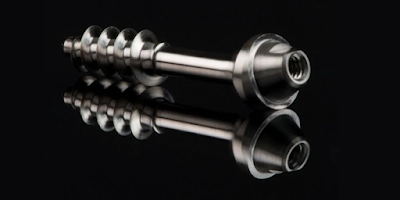
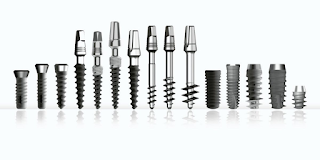
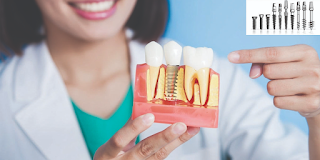
Dental implants are constructed of steel and frames that are surgically inserted into the jawbone under your gums. After they have been placed they allow your dentist to put new teeth over them.

How does the Process? Best Dental Implants Work?

Implants are joined into the jawbones, they can provide the most stable foundation for artificial teeth. Dentures and bridges that are that are attached to implants don't slip off or move in your mouth. This is advantageous when you eat or speak. The snug fit allows bridges and dentures, as and individual crowns placed over implants appear more natural than conventional bridges or dentures.

For some, traditional bridges and dentures are uncomfortable or are not feasible due to sore or aching areas and ridges that are not as strong or well-defined or gags. Furthermore, regular bridges have to be linked to teeth on either of the sides of the gap left by the tooth missing. Implants are advantageous because they do not require nearby teeth to be prepared or broken down to hold your replacement tooth teeth to be in the proper place.

In order for implants to be put in the gums must be healthy and bone mass to in supporting the implants. It is also important to make sure that the structures are healthy. An effective oral hygiene routine as well as regular dental visits are vital to ensure the long-term longevity of dental implants.

Implants can cost more than other alternatives to replace teeth. Additionally, the majority of insurance companies typically cover a tiny portion of the costs.

The American Dental Association considers two types of implants as safe. They are:

Endosteal implant: These are surgically implanted directly into the jawbones. Once the gum tissue has healed, a second operation is needed to connect an implant to its original implant. The artificial tooth (or teeth) is attached to the post as the form of a single piece, or joined in the form of a bridge or denture.

Subperiosteal implant: are made up of a frame made of steel that is attached to the jawbone underneath the gums. When gums heal, the frame will remain fixed to the jawbone. Posts that are connected to frames extend beyond the gums. Similar to endosteal implants, artificial teeth are positioned on posts.

Contact Simpladent to get the the Best Dental Implants as well as Zygomatic Dental Implants.

Source: https://www.simpladent.in/what-are-dental-implants/

Monday, May 30, 2022

WHAT ARE DENTAL IMPLANTS? ARE THEY WORTH IT?

Dental Implants

Dental implants are worth the effort and cost when you have to replace a tooth that has fallen out. Implants are a solid base for removable or permanent teeth. They can be made to look just like natural teeth.

The loss of teeth can be as a result of decay, cavity or periodontal diseases, as well as injuries. Contrary to other alternatives for replacing teeth implant dentistry replaces both the tooth as well as the root. This will keep a gap from creating the others teeth shift.

WHAT ARE THE BENEFITS TO DENTAL IMPLANTS?

Appearance: Implants are used for an aesthetic function by appearing like natural teeth.

Speech: Dentures may slip out of the sockets for your teeth and result in slurring or murmur. Because Dental Implants are fused to the bone of your mouth and bone, you do not have to be concerned about this issue.

Dentures: If your dentures aren’t fitted properly chewing may be difficult. Because implants function as your natural teeth, they can be eaten normally.

Self-Esteem: If you’re missing teeth, it could make it difficult to smile in public. painless dental implants can help you feel confident of your appearance.

Durability: If taken care of appropriately, dental implants could last for many years and do not require any maintenance, other than maintaining a healthy oral hygiene.

Convenience: Because permanent Zygomatic Dental Implants don’t have removal or held in place using adhesives, they’re more practical than dentures.

Security: In the majority of cases surgery is completely safe and fairly painful. Certain people might experience slight discomfort and irritation to the gums after surgery that a prescription medication can aid in.

Who Can Get Dental Implants?

Most healthy people are eligible for dental implant surgery. These requirements include:

Bone-rich gums and healthy gums with enough to support the implant

A good oral hygiene

There are no co-morbidities like hypertension or diabetes that is not controlled

No heavy smoking

In the past, patients who suffer from diabetes were advised not to have dental implants. But, the current guidelines say that patients who have their blood sugar levels in control are able to take advantage of the treatment.

Before making a final decision about implants, it is recommended to consult with your dentist.

HOW DO DENTAL IMPLANTS WORK?

Implant surgery for dental implants is a complicated procedure that requires an experienced team of dental surgeons. The treatment plans are customized to the requirements of every patient.

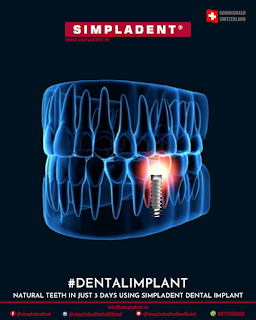
The tooth implant made of titanium is created and then placed into the socket of the tooth. The gums around the new root will heal within 12 weeks, and it is then secured in its place.

Then the connecting post, also known as an abutment is then attached to the root. The abutment is used to anchor the new tooth in place to connect it with the root.

A tooth substitute that is similar to the original tooth is attached onto the root.

Source: https://www.simpladent.in/what-are-dental-implants-are-they-worth-it/

WHAT ARE DENTAL IMPLANTS?

Dental Implants

Dental implants are made of metal and frames which are surgically placed in the jawbone underneath your gums. Once they are in place, they permit your dentist to place new teeth on them.

What Is The Procedure For Dental Implants Work?

Since implants are fused to the jawbone, they offer an extremely stable foundation of artificial teeth. Bridges and dentures attached to implants won’t slide off or shift around your mouth. This is which is especially beneficial while eating or speaking. The secure fit makes bridges and dentures as well as individual crowns set over implants — to feel more natural than traditional bridges or dentures.

For some, normal bridges or dentures are uncomfortable or not even feasible due to sore areas, poor ridges, or gags. Additionally, normal bridges need to be connected to the teeth either side of the gap created by the tooth that is missing. Implants have the advantage that there is no need for adjacent teeth to be prepared or smashed down in order to secure your new replacement tooth or teeth in the right position.

For implants to be placed, you require healthy gums and bone mass to help support the implant. It is also essential to ensure that these structures are in good health. A meticulous oral hygiene regimen and regular dental visits are essential to the long-term viability of Dental Implants.

Implants can be more costly than other options for tooth replacement. Moreover, the majority of insurance companies usually only cover only a fraction of costs.
According to the American Dental Association considers two kinds of implants to be secure. They are:

Endosteal Implant: these are surgically placed right into jawbones. After the gum tissue is been healed, another operation is needed to attach the post to the initial implant. Then the artificial tooth (or teeth) is fixed to the post in a single piece or joined together in a denture or bridge.

Subperiosteal Implants: are made up of a steel frame that is fixed to the jawbone beneath the gums. As the gums heal the frame will be permanently attached onto the jawbone. Posts that are attached with the frame extend from the gums. Like endosteal implants artificial teeth are attached on posts.

Contact Simpladent for Best Dental Implants and Zygomatic Implants.

Source: https://www.simpladent.in/what-are-dental-implants/

Sunday, February 27, 2022

ALL THAT YOU WANT TO KNOW ABOUT BASAL IMPLANT

Basal Implants

Basal implantology, also known as bicortical implants, or cortical implantology is an advanced implantology system. In Basal Implants, the dental implants are designed in a specific way so that they perfectly fit in the basal cortical bone areas. The basal bone offers excellent retention quality for implant retention. Basal implantology falls under the category of orthopedic surgery, and as such they are often termed as “orthopedic implant” to differentiate them from more common Dental Implant.

History Of The Basal Implant

The first recorded usage of this type of implant dates back to 1972 when it was first used by Dr. Jean-Marc Julliet in 1972.

In the mid-1980s, French dentist, Dr. Gerard Scortecci, improved upon the previous Basal Implant method and developed specific tools as well to perform this procedure. Dr. Gerard in collaboration with other dental surgeons is also credited with the development of disk implants. Since the mid-1990s, a group of dentists in Germany have worked on further advancement of this technique leading to the development of the modern basal osseointegrated implant or lateral basal implants.

Advantages Offered By Basal Implant

It is important to note that teeth are located in less dense bone portions of the jaw bones, known as the alveolar bone or crestal bone.  Since they are less dense, they generally recede faster than other bones. The bones that are keft behind after the loss of crestal bones are known as basal bones.

This basal bone is susceptible to resorption as well as different types of infections. Basal bones are dense, and as such offer excellent structural support to implants. In contrast, normal dental implants are placed in the crestal alveolar bone, which as mentioned above are less dense and as such more prone to resorption.

For basal as well as other types of implants, you need to visit a dental clinic that possess the expertise of placing implants at strategic position and loading it before bone remodeling starts, thus completing the case within 72 hours following Immediate Functional Loading Protocol. This way you can do implantology at lesser cost and less healing time.

Source: https://www.simpladent.in/all-that-you-want-to-know-about-basal-implant/

Tuesday, July 27, 2021

What Are Dental Implants and What to Expect in its Procedure?

Single Piece Implants

All things considered, you may definitely know individuals who have gone through dental implant treatment. The implants can be incredible for supplanting the missing teeth. Further, you should know that this treatment is quickly turning into the top choice for the management of tooth loss. At this stage, it is important to understand the basics of dental implants and expectations in its procedure.

Describing Dental Implants and its working

The current era belongs to Single Piece Implants that allow reducing the number of surgeries and delivers a good jaw health in very less time. But, some people might know about the double or triple piece implants that have an embed post or screw that is embedded into your jawbone, a projection that is joined to the embed post or screw and which juts simply over your gum line, and the last tooth reclamation that will conceal the projection. Here, the screw is used to bond with the jawbone during the process of osseointegration. In this place, the growth of new bone cells takes place. This bonding cycle assists with guaranteeing the implant post is strong enough to support the substitution tooth. 

What to Expect in the Dental Implantation Procedure?

The process of a single piece Dental Implant is rather speedy and can be finished in as little as 60 minutes. In most cases, a standard sedative works just fine, however, if you are apprehensive, then talk it out with your dental specialist first. Assuming you require different dental implants, it is suggested to take a little extra anesthesia. When the implants are set up, they should be left to mend and incorporate with the jawbone, which requires nearly 3 months. However, if you will go for a single piece implant, also known as Zygomatic Implants and basal implants, then the duration of 3 months will be reduced to 3 days. With these implants, you can expect a flawless implantation procedure which will take less time and attempt to complete.

What Is The Average Cost of a Dental Implant Course?

Among various modern tools and technology in the dentistry segment, it is important to assess the qualifications and training of the concerned implantologist. Consequently, if you are a proud implantologist practicing in India, then you should have the best training with the latest dentistry tools and implants. 

Simpladent Implant Solutions Pvt Ltd is offering the best courses in the dental implantation segment, which impart the best training and knowledge to every delegate taking part. We have different courses and training sessions and each one costs differently. However, if you are wondering about the average cost of a dental implant course, then it is roughly around INR 40,000 + GST in India. However, the accurate cost is dependent on the type of course training selected by you and the number of modules to be taught in it.

If you are searching for the best and latest Dental Implant Course, then check this website https://www.simpladent.in/. Here, you will find the latest courses on offer by Simpladent Implant Solutions Pvt Ltd. 

For Enquiries Contact Us:

☎ +91 - 9711150803
✉ info@simpladent.in
🌐 https://www.simpladent.in/
▶️ https://www.youtube.com/channel/UCf-isW379OZ99nnJm5onUGw

Source: https://www.simpladent.in/what-are-dental-implants-and-what-to-expect-in-its-procedure/

What are Dental Implant?

Dental implants are constructed of steel and frames that are surgically inserted into the jawbone under your gums. After they have been plac...